Showing posts with label Analysis. Show all posts

Friday, 14 March 2014

Analysis of Short Dramas

In this weeks seminar we watched a number of short dramas. We also learnt about the narrative structure used in a drama and how it was made up of four different componenets; the INCITING INCIDENT, any OBSTACLES they might come across along the way, the climatic moment or CLIMAX and then the DENOUEMENT when everything returns to normal.

Below I will analyse a few of the films we watched in the seminar and I will identify how each of these four components are represented in the film.


Sign Language - Oscar Sharp - 2010 - 5 mins

INCITING INCIDENT - The character's last day on the job, holding a sign on Oxford Street, before he starts his new job the next day.

OBSTACLES - All of his co-workers don't seem bothered that it is his last day and they don't really seem to pay much attention to him.

CLIMAX - At the end of his last day at work, all of his colleagues then surprise him by saying that they'll miss him via the signs they are holding. They also tell him to ask out the girl he fancies.

DENOUEMENT - He gets the girl and starts his new job as a pilot.

OTHER COMMENTS
This film was very different to other dramas that I have seen as this piece was filmed in a documentary style by using a lot of handheld shots. The sound was also interesting in this film as there was a lot of diagetic sound and also Sharp included a voiceover, to add to the documentary-esque style.


Pudding Bowl - Vanessa Caswill - 2009 - 7 mins

INCITING INCIDENT - Boy is grounded and his friends are banging on the window to try to get him to come outside. The boy then puts glue on his sister's hair so she gets in trouble with their mum.

OBSTACLES - The mum cuts all of her daughter's hair off by using a pudding bowl as a guideline.

CLIMAX - The young girl then dresses up and steals her brother's bike, causing him and his friends to chase her down the street.

DENOUEMENT - She rides off down the road as she visualizes herself as a tall woman with long hair biking down the road and having men chasing her, suggests that they are lusting after her.

OTHER COMMENTS
The sound in this film is very interesting as specific diagetic sounds, like the scissors cutting the paper, were very distinct. Also when the girl is imaging herself as a woman on the bike, the image seems slightly dreamlike because of the way it was edited and how it plays in slow motion.


About a Girl - Brian Percival - 2001 - 6 mins

INCITING INCIDENT - In this film there isn't really an inciting incident as most of the film she is talking about her life, however it can be seen that the inciting incident is her talking about how she wants to live with her dad but he won't let her.

OBSTACLES - There aren't many obstacles present in this film as until the end, the film is very slow and seems as if it doesn't have a point.

CLIMAX - Climatic moment in this film is when we realise what has been in the bag she is carrying as it is revealed via her dumping the contents into the river. The contents of the bag is revealed to be her dead baby, which she had hidden the pregnancy for, given birth to it and killed it, then dumps the baby in the river to get rid of the evidence.

DENOUEMENT - The film returns to normality as after she has dumped the bag into the river, she walks off and gets an ice cream.

OTHER COMMENTS
In a similar way to 'Sign Language' this film is filmed mainly with a handheld camera, which follows the girl as she is talking straight to the lens. This is also different to other films in this genre as nothing really dramatic happens in this film until the last 30 seconds.


Rite - Michael Pearce - 2010 - 16 mins

INCITING INCIDENT - Son's birthday so he picks him up from his mum's house, obviously divorced parents.

OBSTACLES - Dad is very distant from his son, he doesn't know anything about him and they have absolutely nothing in common.

CLIMAX - The father gets violent with a security guard at the doors to the football game he wanted to take his son to.

DENOUEMENT - Father finds out that his son is gay and invites the two of them to do something together that his son wants to do.

OTHER COMMENTS
This film is interesting as it sets up the ending as if the dad was going to react violently to finding out about his son's sexuality, but surprisingly he was very calm and didn't react the way that the audience expected.

Tuesday, 11 February 2014

Our Approach/Analysis of 'Still Born, Still Loved'

We've decided that the approach we want to use will be partly observational and partly poetic as we will use quite a few observational shots, but will also include interviews and structured cutaways.

A film that uses a similar documentary style to the one we would like to use is Debbie Howard's 'Still Born, Still Loved'. This is because it uses all the elements that we would like to incorporate into our documentary.


The observational shots that we will use will be of Jayden's mother, Eleanor, doing the normal things she does around the house. This will include shots of her doing things for Jayden, e.g. preparing his food or giving him his medicine etc. Below are observational shots from 'Still Born, Still Loved'.


Most of our documentary will consist of interviews with both Jayden's mother, Eleanor, and his 15 year old sister, Rebecca. We've decided to use two camera to film so that we can get both a wide shot of each interview and also so we can get a close up shot of the interviewee's face. We could have done this with one camera, but as we cannot predict what their responses to the questions will be, we don't want to get the wrong shot for the wrong question. Therefore by using two cameras we can guarantee that we will have all of the interview filmed with both a wide frame and a close up so that we can see the emotion on the interviewee's faces as they respond to the questions.


Similarly to this documentary we will also be using a lot of cutaways during our piece to make it seem more interesting to watch. The actual cutaways we are planning to use are also very much like the ones in 'Still Born, Still Loved' as our documentary is also about a baby. The cutaway shots we are planning to use are things like Jayden's toys, his bottles, medicine etc. Other cutaways we want to shoot are things like the family playing with Jayden and establishing shots, such as the front of Eleanor's house.


Another idea we want to use as well as the footage we shoot on location is the use of text in our piece. We want to add information about Jayden's cancer in the piece, and we feel the easiest and most effective way to do that would be by including text in our documentary.


Saturday, 1 February 2014

'The Runners' by Matan Rochlitz & Ivo Gormley

After analysing some of the films we saw in our seminar I decided to do some more independent research and look at documentaries that use a more direct interview technique where the audience can hear the interviewer asking the questions.


One of my favourite short documentaries that I have found is 'The Runners' by Matan Rochlitz & Ivo Gormley. It follows different people whilst they are enjoying their morning run. The interviewer asks the runners personal and deep questions which people would normally reject if asked by a stranger. However, it is believed that when we run it allows us to reflect on the important things in our life, therefore the runners are more open to answering these types of questions.

This piece has more of a portrait style in comparison to more stylistic pieces like James Lees' 'Pockets'. This is because the content of the film is very personal, due to the private nature of the questions asked. You can also hear the interviewer asking the runners the questions, which also makes the piece seem more real. The content of this documentary relates to the film's form as camera is clearly handheld, showing that the camera operator is running with the interviewee, making it seem more personal, relating back to the content of the piece. However, one shot has clearly been constructed for the piece. This is the shot following a man running onto a field and then the camera crosses a tree, once the camera has passed the tree the scenery has changed. This is an interesting shot to use in this piece as the rest of the film seems very unplanned and 'in the moment', however this shot must've been planned ahead.


Apart from the interviewer/interviewee talking, most of the sound in this piece comes from the footsteps of the runners. This is an interesting technique to use as it creates an underlying beat to the interviews. This is also interesting as you can hear the change of pace when the
camera focuses on a different runner, which also changes the pace of the piece. As well as the diagetic sound there is also a music track playing underneath which fills the space inbetween when people are talking. However, as the film draws to an end, the music is playing whilst the interviewees are talking, making the piece more emotive.

There are a lot of cutaway shots used in this film whilst the interviwees are saying their piece. Although, when the runners are saying something very private or revealing then the camera is always focused on them, most of the time a close up of the runner's face is used. This helps the audience connect with the runners as we get more personal with them.

Friday, 31 January 2014

'The Archive' and 'Pockets'

In this week's seminar we watched some short documentaries so that we could get an idea of the type of film we would be making for this project. The two that I found the most interesting were Sean Dunne's 'The Archive' and James Lees' 'Pockets'. This is because both have used elements of a stylistic approach to make their piece more visually interesting than the average documentary. Each film uses elements of different approaches to the way the piece is made, however both are an inspiration to the piece I would like to make for this project.


The Archive by Sean Dunne


The Archive is a short documentary about Paul Mawhinney and his vinyl record archive worth over $50 million. The film follows Paul and his struggle to sell the collection as "no one gives a damn" about records anymore due to the rise in CDs and digital music downloads.

This piece is very interesting as it uses elements of a typical documentary but also includes a lot of constructed shots to give it a stylistic effect.

Using shots of the main character in an interview setting saying a piece to camera is typical of this genre of film, however Lees has done this in a specific way so that the audience does not just focus on the person in the shot. The shot is framed so that the interviewee, Paul, is on the far right of the shot so that at least half of the frame is filled with the background. In the background we can see all the aisles of records that Paul is talking about as the cinematographer has used a deep depth of focus so that it is all clearly visible to the audience.

One of the more stylistic elements is the way that most of the cutaways have been shot. An example of this is the way the film uses tracking shots to show the many aisles of records in the archive. Another example of the use of a stylistic approach is the way that all the lights in the archive are turned off at the end of the piece. This has been done to symbolise the way that the records in Paul's collection will be forgotten about if no one buys them.


The symbolism of the lights is used to connect with the emotion of the piece as it makes the audience really understand how much this all means to Paul, therefore when he gets upset, this then gets an emotional reaction out of the audience. Another way that the emotion is reflected in the film's form is the music used for the piece. At the start the music is very upbeat and happy as the piece has quite a comedic element to it, however as the film goes on, the music gets slower and more emotive as the content becomes more serious. Towards the end of the film there is over a minute where we do not
hear anyone talking and there is just music playing. This accompanies a shot of Paul getting upset whilst listening to the lyrics as it was his "life song".

Another interesting feature that has been used in this piece is that we see the same shot repeated several times throughout the film. This is a close up shot of a record being played, however each time we see it, a new song starts playing, representing a new section of the film.


Pockets by James Lees


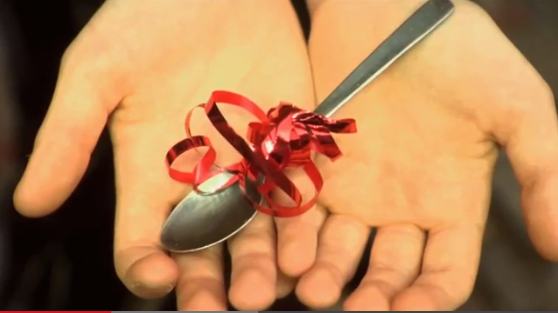
Pockets is a very short documentary which consists of people holding items that they found in their pockets. They then describe the item and what it means to them.

This style of documentary is very interesting as only part of most the people being interviewed is in the shot. This is very different to a typical documentary as the interviews are not framed like a typical interview, instead we only see part of their face and their hands.

The shots of the hands in this piece are all very similar, with the hands open and holding their object. The depth of field in those shots is very shallow. This shows that the audience has no knowledge of what the item is or what it means to them, unless the owner decides to tell them.


The music in this piece is consistent throughout the film. It's a very mellow track, which gets louder when there is no one talking. By lowering the volume whilst people are being interviewed, this makes it easier for the audience to hear the interviewee describing their item, but also means that the music in the background is always present. When making my documentary I will keep this in mind if I decide to include music.

Tuesday, 12 November 2013

Experimental Film Analysis - 'Nostalgia' and 'Telling Lies'

Nostalgia by Hollis Frampton


This piece involves a man talking about his photographs, e.g. why he took them, what the photo was of etc. The film consists of these photos burning in a pot. However, when we see a photograph on the screen, this is not the photo he is talking about. When we see a photo in the frame, the man is actually describing the next photo that the viewer will see, not the one on the screen at the time.
There is no additional sound added to this piece apart from the sounds you would expect to hear. These sounds include the man talking and the sound of the photo burning. However, there are periods where there is no sound in the film. This silence can last quite a while, I imagine this is to give the viewer some time to think about what he has just said and to try and imagine what the picture will look like after he has described it.

Telling Lies by Simon Ellis


This film contains only words, there are no actual images in this piece. This makes the piece seem more interesting as it is quite unusual. However, the words that appear on the screen are not the words that the people say, this is to show that the words on the screen is what they are really thinking but not saying, hence 'telling lies.'
This film is similar to 'nostalgia' in the way that the only sounds that you hear are sounds that you would expect, e.g. the man talking to his friends.

Monday, 28 October 2013

Further Research

After deciding that we were going to do our experimental piece about preparing/cooking food, I have done some more research by watching different film clips involving food to find some inspiration and to get a better idea of what we want our piece to look like. I will now add a link to each piece that I have watched and will discuss my thoughts in relevance to our piece.


Delicatessen by Jean-Pierre Jeunet and Marc Caro


This is the opening titles for the French film Delicatessen. This piece does not have much sound to it apart from the music in the background, although it does have the sound of knives being sharpened at the beginning which I have already established as quite a harsh sound and is used quite often in films/sound pieces to do with food, therefore this would be a good sound to include in our piece.

However, this piece is quite interesting to watch as you can see all of the meat being chopped up and the blood making interesting patterns on the tablecloth. Using a table cloth to cut the meat on makes the film more interesting as you can see all the blood being soaked up by the cloth, making it more visually enticing.


The Cook, The Thief, His Wife and Her Lover by Peter Greenaway

SKIP TO 12:33


This film includes a number of very interesting tracking shots that take the viewer from one end of the dining room all the way through to the other end of the kitchen (12:33 - 13:20).

Now although this is very interesting to watch, I have included this clip in my research as the sounds that are present in the kitchen during the tracking shot have grabbed my attention. This is because as the camera goes past each chef, they are all doing something different creating the different sounds. For example the first kitchen related sound we hear is running water, then throughout the clip we the sound of knives sharpening, whisking, chopping, stirring and pans clattering. These are all sounds that I could use in my piece.


Be Wonderful and Wise - Lurpak Advert


Although this piece is an advert and not from a well known film or artist, I have decided to use this as a piece of research as it is very relevant to the piece that I would like to make. This advert is good inspiration for both the sound and visual part of my experimental film as it includes sounds that would be present in the kitchen and interesting camera shots that attract the viewers attention, e.g. the knife shot when chopping the onions and the pattern that the red cabbage makes when cut in different places.


Food Not Bombs by Hajan Aznam


This piece is an experimental film and sound piece from a film student from the University of Technology Sydney. When I found this clip it was incredibly inspirational as it had everything that I was trying to research, an experimental piece that was both sound and visually interesting.

Food Not Bombs includes all the sounds that come from a kitchen and turned it into a musical piece. This makes it interesting to listen to as its not something that you would normally hear on a day-to-day basis. Creating music with kitchen sounds is a possible idea that we might use for our final piece after talking to our seminar leader.

The film also contains good visuals with the director layering different images on top of each other. The way that he has edited as well makes it look like the images where food is involved could be lots of pictures editing together at a fast pace to make it seem like they are moving rather than a smooth flow of the camera videoing the shots.


Each of these pieces are inspirational to my work in different ways but have helped me gather a better idea of what I want to do for my piece.

Friday, 18 October 2013

Short Sound Analysis - Meat Factory Ear Worms


In this week's seminar we watched a number of different sound pieces and tried to pick out the different sounds that we could hear. The piece that I found the most interesting was called Meat Factory Ear Worms by Richie Bierne. This piece is very interesting as it uses a variety of different sounds including, speaking, music and background noise.


The piece starts with a man talking about his time working in a meat factory, apart from the man talking; the first sound we hear is a butcher knife being sharpened. This is a very harsh sound and has a strange effect on the listener as it is not very pleasant. The sound of the knife is repeated throughout the piece to show the brutality of the factory.

In the background you can hear the sounds of the machinery on the production line and the sound of the cows mooing as they are being killed. This is repeated when he talks about the negative or practical parts of the job. However, when he talks about the positive times where he was thinking about something else, there would be music playing in the background, which he referred to as 'ear worms'. The music helps him escape the brutality of the factory. At some points the sound of the knife is played over the soft music to show the contrast between where he was and how he escaped it.

When Richie talks about his journey to work, you can hear the engine of an old car revving in the background and a song playing on the radio. This is an example of how the form of the piece relates to the content.

At one point he talks about the time he went to the hospital after he stabbed himself in the knee when skinning a cow. The sound played over that is Richie saying the word 'beep' over and over again. This has been used to symbolise the monitors at the hospital. The sound is also played when he talks about the factory at the end, which then symbolises the production line in the factory. Also when he stabs himself, you hear the noise of a cow which sounds like it's in pain. Once again this is another example that shows the form relates to the content.

Sound Tutorial


In this week’s Production Skills seminar we got a chance use some audio

equipment and play around with a few different microphones to see which one records the best sound in different situations. The piece of equipment we used was a Samson Zoom H4n. This handheld audio device already had a built in mic, which meant that we could start recording without having to add on an external microphone. There are 2 microphones located on the top of the H4n, which cross over at either a 90° or 120° angle. This makes the mic more versatile for different recording situations. I found that this mic would be best to use if I needed to record the audio of a place where there are lots of sounds (background noise e.g. a crowd, train station etc.) as oppose to recording somebody talking or a specific sound.
To do this I would use an external microphone which would fit the XLR/Hi-Z Input Jacks at the bottom of the H4n. This was good for recording a specific sound as the mic just picked up sound that was close of it, therefore the closer you got to the object making the sound, the better the audio.

 The third microphone that we used was a H2a-HLR Hydrophone. This mic allowed us to record underwater, which I found very interesting as we got to take the equipment out and test it so I got to hear what this sounds like. This mic also records vibration if you put what we referred to as an ‘egg cup’ on the end of the microphone. If you put this against a hard object and then hit the surface, this will make an interesting sound as the mic will pick up all the little vibrations that go through the object.

Thursday, 10 October 2013

Short Film Analysis - Love Me or Leave Me Alone


In this week's seminar we watched a variety of different short films and analysed them after we watched them. In this blog post I am going to analyse one film in particular named 'Love Me or Leave Me Alone' directed by Duane Hopkins and explain how the content relates to different aspects of the film form.

  The focus of this film is about two young teenagers discovering the problems and challenges with first love. The film starts with a young couple arguing and shouting about how much they hate each other and that they never want to see/speak to each other ever again. This goes on for quite a while until the couple get back together and seem to have sorted out their problems towards the middle of the film. Although this is normally where a romance would end, on a happy note, the couple then start to have problems again and the film ends without any resolution to their problems.

  This films challenges many conventions of its genre as usually in a romance the film will start with an equilibrium, then this would be disturbed towards the middle of the film and at the end the equilibrium would be restored. However, this film starts and ends with a disequilibrium which is very uncommon for its genre.

  The techniques used in this film are very interesting, which allows the viewer to become a lot more involved in the story. The technique that I found most interesting about this film was the editing used for some of the scenes. An example of this would be that the opening shot is of a boy facing the camera then turning and spitting, which is all shown in slow motion. The next shot is of the spit from the boys mouth landing in a girl's face. She then starts shouting about what had just happened causing an argument between the two. This scene had a lot of very quick cuts from different shots including different angles, zoom length etc.
  Quick cuts are used in filmmaking as it suggests energy and chaos, which is relevant in this scene as the editing matches the chaos of the fight. The reason that I find this technique even more interesting is because of the contrast of the two shots, the slow-motion and the fast paced sequence. This makes the fight seem very sudden and shows that it has escalated very quickly without much incentive.
  This same technique is used during the sex scene between the couple. The shots go from an over the shoulder view of the couple where they are being quite slow and quiet, to fast pace cuts where the couple get a bit more energetic. These shots go from one to the other for a while to show how it has escalated.

   The sex scene itself though does not seem very intimate throughout all of the shots. This links back to the facts that the couple is very young and this is their first love so they don't really know how to feel during those moments. This scene also takes place in what looks like an abandoned shed. The reason that they are using a shed, which is not a very romantic setting, once again links to the fact that they are a young couple which means that they have nowhere to go, as they don't want to stay at home all the time but they are not old enough to go down to the pub. This is a recurring theme throughout the film as it is set in the countryside, many of the settings are outdoors including places like the shed, a shelter, along a country road etc.

  As the location of this film is in a rural setting during the winter, everything seems very grey and dull. Even the clothes that the characters wear are very plain and are mainly colours like grey or a dirty white. The lack of colour in the film relates back to the fact that these teenagers are bored and this is reflected in the clothes they wear.

  The lack of colour in the film is even reflected in the lighting used. This is shown especially at night as the couple are barely visible in the dark. An example of this is towards the end of the film when the teenagers are discussing whether they should remain a couple; they are barely visible under a street lamp. This causes the camera to only see half of their faces as the rest of the frame is filled with darkness.

  Another interesting technique that Hopkins has used is the way that he builds tension during the film only for it to lead nowhere as the film does not match what you expect to happen. This happens a couple of times during the film, an example is when the young girl tries to hitch a ride along a country road. Once a car stops for her and she gets in, you do not see the driver's face which seems mysterious, the boy is then seen in the wing mirror trying to catch up to the car. The boy seems frantic and desperate to catch the car, which then makes the viewer think that something bad is going to happen involving the girl and the car's driver. However, this then leads nowhere as the girl gets home safely. Another example of when the director used this technique is right at the end of the film, the last shot is the boy riding his bike home in complete darkness and all you can hear is the squeaking of the wheels as he pedals. The squeaking then stops for the boy to catch his breath as a car comes up behind him, suddenly illuminating the boy as he is looking over his shoulder. As the camera is focused on him, the tension builds as this leads the viewer to believe that the boy is going to be involved in an accident, although once again this does not happen, thus challenging the audiences expectation of the films ending once again.

  The camera shots used in this film are also very interesting as a variety of different techniques are used. An example of this is when the boy is in the shelter deciding if he should follow his angry girlfriend or not, half of the screen is filled with the field and the other half is in complete darkness. I find this shot interesting as it looks like it could be a split screen, each side relating to how the boy is feeling about whether to follow her or not.

  Throughout the film the characters do not use much dialogue apart from when they are arguing and shouting at each other or when one of them is pleading for the relationship to work. This made me think that the couple don't have much to say to each other as whenever they are talking it is always seen in a negative way, e.g. shouting at each other or questioning whether the relationship should continue. Once again this links back to the theme of boredom in the film as they don't have anything positive to say to each other, therefore they seem to be creating drama for themselves.